
The Studio Mindset | What a Recording Engineer Taught Me About Breaking Into Any Industry with Mark Martin
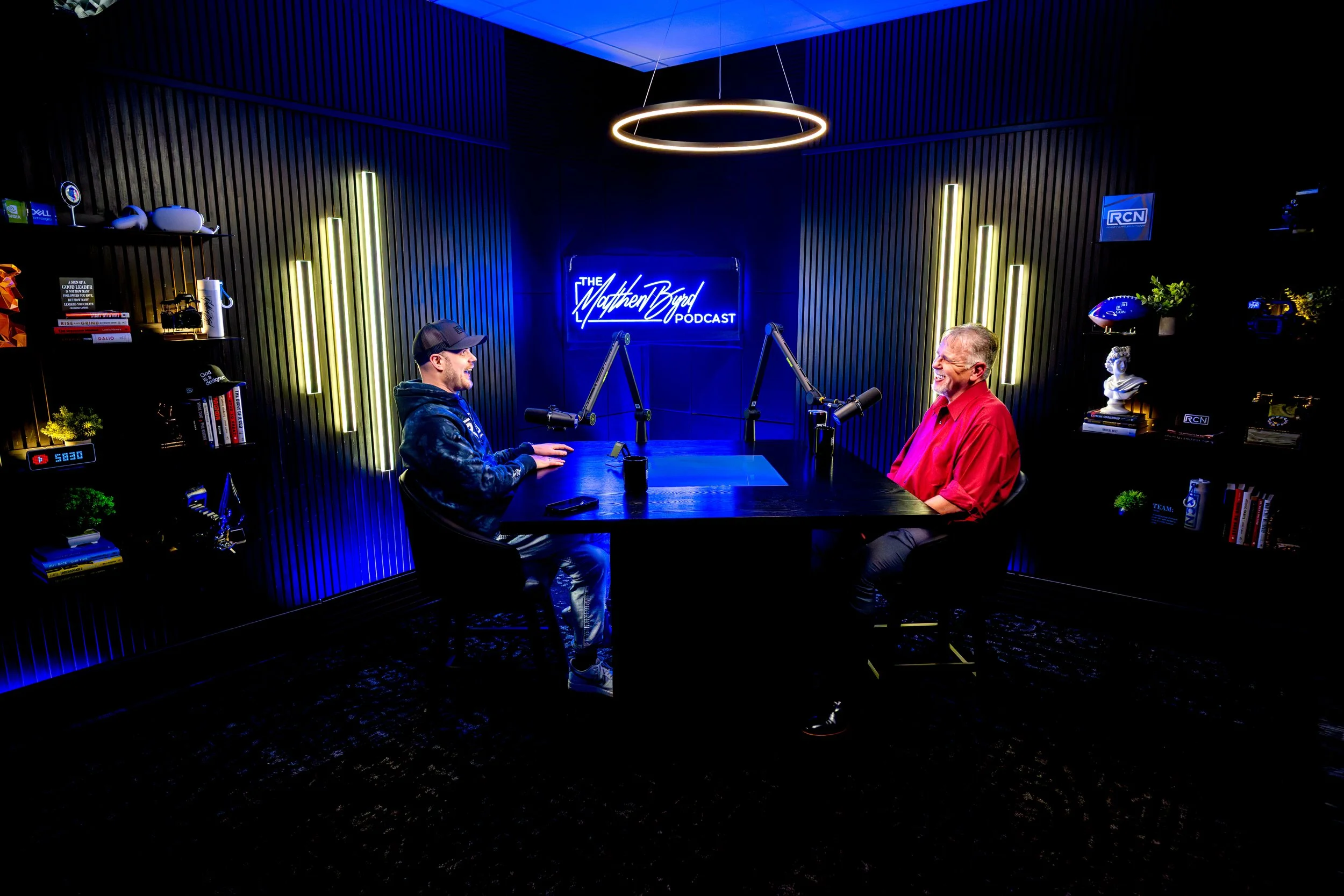
FULL EPISODE
Mark Martin was a studio tech. His job was to tear down the session, make the safety copies, and leave. Instead, he stayed for hours, pull up the multi-tracks and ask questions nobody told him to ask. What compressor are they using? What's the ratio? What's the threshold? Why is it set that way? He wasn't assigned this or paid for it…he just couldn't leave without knowing.
Most career advice centers on credentials, connections, or timing. Mark Martin's story reveals something more fundamental and available: the willingness to stay curious after the job is done. In a technical field evolving faster than most companies can keep up with, that quality is a huge competitive advantage. And unlike a degree or a certification, it costs nothing except the willingness to ask one more question.
Curiosity as Method, Not Personality Trait
The curiosity Mark describes isn’t a personality trait, but a deliberate practice he applied consistently, across entirely different fields, over more than three decades.
In the studio, he wasn't absorbing information passively. He was running experiments. Pulling up the tracks, adjusting the settings, seeing what changed. He wasn’t satisfied if something worked until he understood why it worked. That same method showed up years later when he got his hands on the original DJI Mavic and started teaching himself photogrammetry with DroneDeploy before most people in construction had heard the word. He had no formal background, but he experimented and learned along the way. That was the method.
Self-directed learning compounds so much more than assigned learning. When you're chasing a question you actually care about, you retain more and go further than any curriculum will take you. Mark puts it simply: "I had no idea what I was doing. I learned every single step. I was trial and error, everything."
Visibility Is a Byproduct, Not the Goal
The thing that got Mark noticed in the studio wasn't a polished resume or a formal credential, it was the fact he was always there. The engineer who eventually moved him onto the Dixie Chicks sessions told him directly: "You're always here. You're always working. I watch you." He wasn't performing for visibility, he was so absorbed in learning that the visibility was the byproduct.
The same dynamic played out in the drone world. When he was building geospatial departments with no formal surveying background. WHat earned him credibility was the fact that he had clearly spent thousands of hours caring deeply about getting it right. He talks about chasing one-centimeter accuracy on his LiDAR flights, not because it's required, but because anything less bothers him. That level of investment shows, and people notice it even when they can't name exactly what they're responding to.
The Lesson Nobody Gives You Before You Need It
Mark's closing advice to anyone trying to break into a technical field is simple: find somebody doing the thing you want to do, and ask if you can come along. Carry the battery cases or bring sandwiches…Be useful before you're skilled. He did it in recording studios in Nashville and he'd do it again tomorrow with drones.
Finding someone who's already figured it out compresses years of trial and error into months. He referenced the idea that you could spend four years and a hundred thousand dollars on a degree, or you could spend one year with the right person and leapfrog the same distance.
He said it plainly: "Nobody wants you to make it in this business but you." The people who succeed aren't the ones who waited for the door to open. They're the ones who stayed late, played with the equipment, and made themselves impossible to ignore.
Catch the full conversation From Platinum Records to Point Clouds | Building a Drone Career the Hard Way with Mark Martin on YouTube, Apple Podcasts, or Spotify.
