
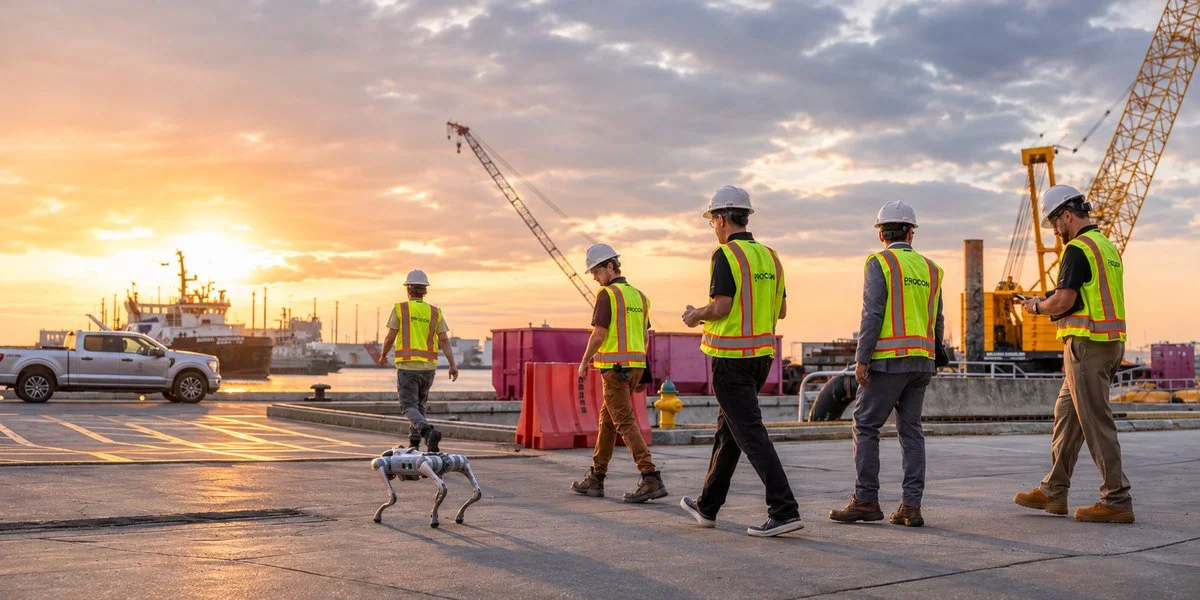
Procon’s technology team with Sparky, the robot used for repeatable 360-degree capture walks at Cruise Terminal 5. Photo: Procon Consulting.
Procon is extending a pilot that uses repeatable 360-degree walks to document changing site conditions.
Procon Consulting announced on November 13 that it is expanding robotic reality capture with the Canaveral Port Authority at Cruise Terminal 5. The team piloted a four-legged robot called Sparky to collect 360-degree views along repeatable routes, giving project staff a visual record they can compare as construction progresses.
What the terminal team is testing
Port Canaveral puts the cost of the Cruise Terminal 5 expansion at $94 million in its 2026 Seatrade media kit. Procon says the expansion and renovation will grow the terminal from about 90,000 to 170,000 square feet. The capture pilot grew out of Procon’s robotics research with Virginia Tech’s Myers-Lawson School of Construction. Teleworker AI helped develop and set up components of the camera payload.
Procon says the walks are intended to make it easier to establish when and where work occurred and to review questions about progress or site conditions. The company is still evaluating capture frequency, reliability and how the records fit into the team’s workflow.
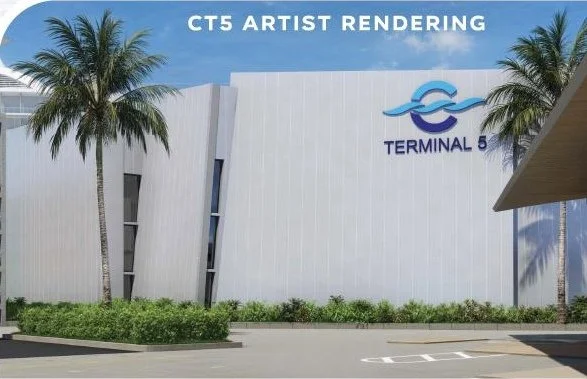
Artist rendering of the expanded Cruise Terminal 5 exterior, cropped from page 3 of the 2026 Seatrade media kit. Rendering source: Port Canaveral.
What owners can specify
Agree on which areas to revisit, how often to record them and how staff will find each visit later. Define who reviews incomplete walks and how to preserve the date and location of each capture. Those decisions determine whether the record can answer a question weeks or months after the walk.
What makes each walk comparable
Procon says the team uses the imagery to compare conditions over time and create a record that can inform questions about progress, schedules and change orders. Teleworker AI contributed to the camera payload, and the deployment extends work Procon and Virginia Tech tested through the MARIO construction robotics initiative.
For a field trial, pick two or three areas where conditions change quickly and compare consecutive visits. Check that each capture is dated and tied to a location, then ask a superintendent to retrieve a specific view. That test can reveal gaps in route coverage, naming and review before the team extends capture to more of the terminal.
Procon’s project announcement · Procon’s November 13 release
