
The Re/Cap Podcast: Maya Ackerman, PhD on Creative Machines, AI in Music & Art, AI History, LLMs, Bias, Psychology
FULL EPISODE
There's a version of the AI conversation that's all market caps, and job displacement; whether your company has a roadmap, and a right to post that much AI slop.
That’s fine, but Dr. Maya Ackerman and her entrancing book take a much more nuanced perspective.
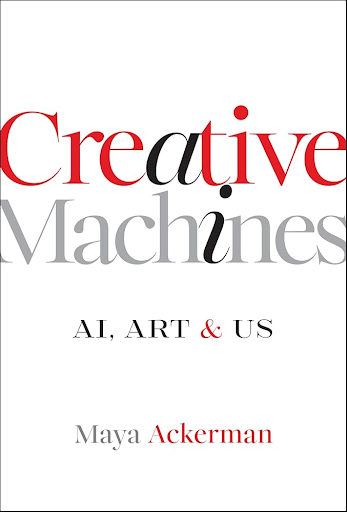
Part history, part psychology, part profound personal experience
The author of last winter’s Creative Machines: AI, Art & Us, Maya is a generative AI pioneer, computational creativity researcher, Associate Professor at Santa Clara University, and co-founder and CEO of musical GenAI startup WaveAI.
The book is gripping, tracing the history of creative AI from a 1970s Bach-imitating computer program to the generative free-for-all of today. She came on The Re/Pod, and within minutes it was clear this was going to be a different kind of conversation.
A few things worth knowing, pre-listen:
She walked into a conference session in 2015 not knowing what computational creativity was, and walked out having found her life's work. Harold Cohen, a celebrated artist who had spent decades building an AI that painted in his style, was on stage, irked that people were calling his system creative. He considered himself the only creative one in the room. Maya watched him, felt something crack open, and never looked back. The field of generative AI had a founding father having an existential crisis on stage, and she was in the audience for it.
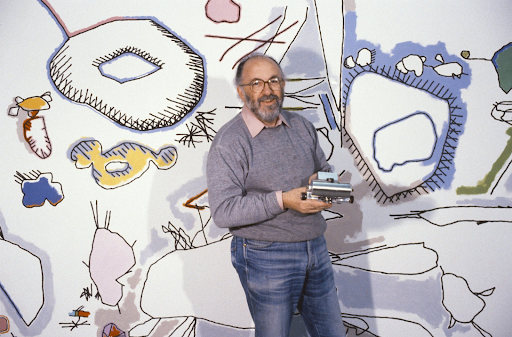
Harold Cohen, widely considered the father of AI art. Credit New York Times
Early AI systems were mirrors, and what they reflected was uncomfortable. Before alignment layers thickened, systems like Midjourney showed us our collective biases with a kind of brutal, unsentimental honesty. Ask for Jewish food for Hanukkah (say, Sufganiyot) and you'd get elaborately stylized bagels. Not hateful, but revealing a shallow, pop-culture-deep understanding of an entire culture. Maya's view is that as systems get more aligned, they stop showing us the truth. They start showing us the bias we're comfortable acknowledging. Which, she argues, is its own kind of problem.
She thinks bias-free AI is an absurd idea. This is the part of the conversation that will make some people uncomfortable and others relieved. Her position is that creativity requires perspective, and perspective is inherently biased. The dream of a perfectly neutral creative AI misunderstands both creativity and neutrality. She holds this view with conviction and makes a compelling case.
The soul of the early generative AI movement has been largely swallowed. The researchers who built the first creative machines - the 200 or so who made up the computational creativity community before the industry gold rush - were mostly artists themselves. They were asking whether machines could grieve with you, help you process loss through song, push the edges of what a genre could be. That spirit, Maya argues, is mostly gone. What replaced it is extraction: faster, cheaper, more content, optimized for output. The conversation about what we lost in that trade is one she's determined to keep having.
Her grandfather survived the Holocaust after losing his entire immediate family. Maya wrote a book about him in 2013, Running from Giants: The Holocaust Through the Eyes of a Child. When asked what lives on from that experience, she didn't reach for abstraction. She said she carries the knowledge that she has it in her blood to survive hard things and still find joy. As I inquired whether AI can actually reduce the hate that still permeates today’s world, it became one of the discussion’s most resonant moments.
Other goldmines we unearthed:
Defining creativity, and creative process vs. creative product
What early systems understood about creativity that new ones have lost
Distinguishing AI-as-collaborator & AI-as-crutch
Psychology: Carl Jung, collective unconscious, and LLM bias
Hallucinations, in machines and humans alike, and their role in creativity
The movie Her
Children learning in the age of AI
Music & human grieving
IP, artist lawsuits, and building a musical GenAI startup
Maya’s richly international life that began in the Soviet Belarus
Europe vs. the U.S. in scientific research
In closing our enriching conversation, Maya's answer to what excites her most in 2026 was a new book still taking shape; and the sense that something interesting is coming, even if she can't name it yet.
