
5 Years of R-CON, Community, Education, & a Conference-Turned-Movement with Matthew Byrd & Phillip Ellering
THE RE/CAP PODCAST
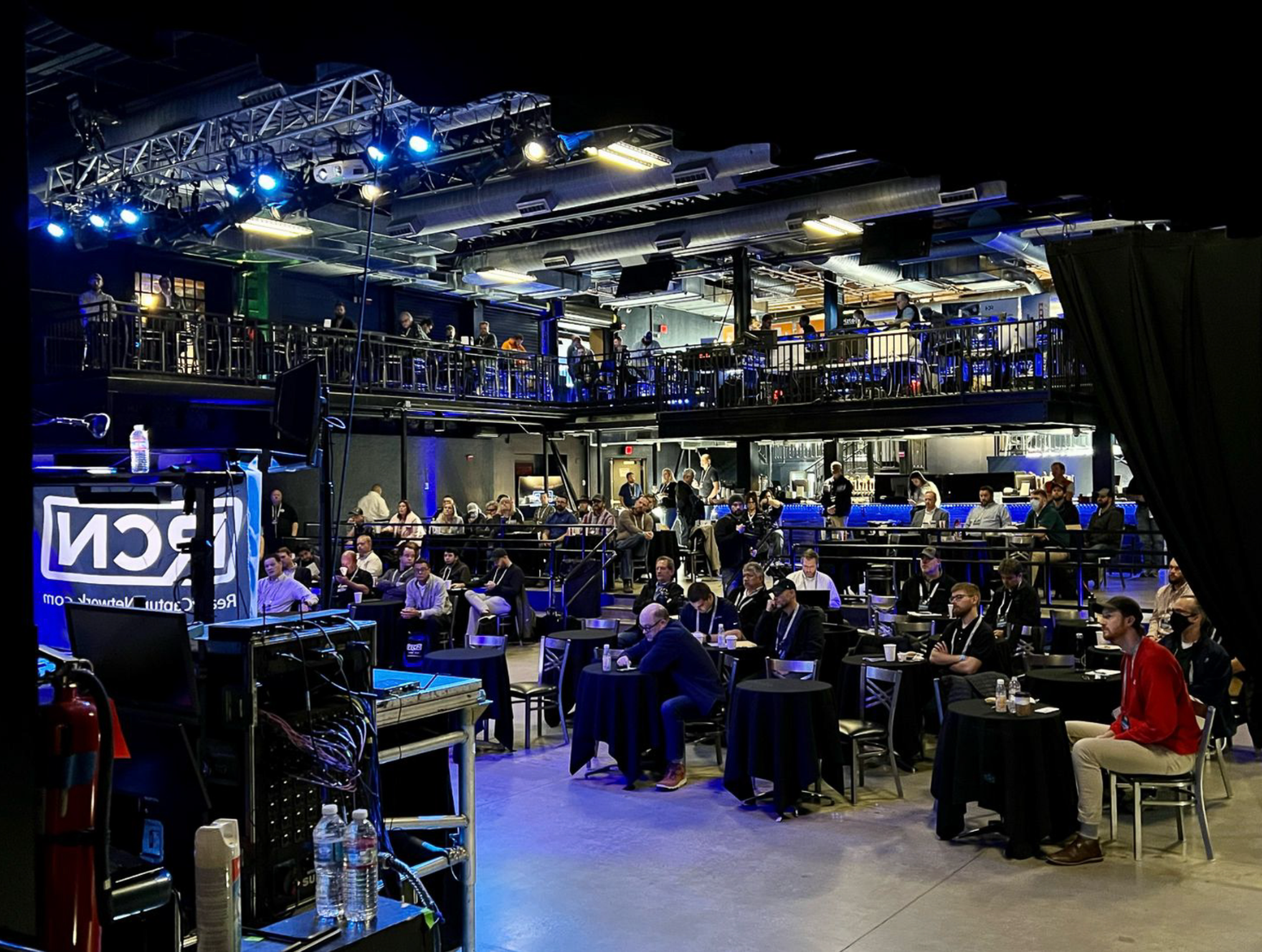
The inaugural R-CON at The Knitting Factory, a Boise Landmark, in 2021
Here's a unit of measurement you don't see every day: the entire location for your inaugural conference, becomes just one of four happy hours at your fifth. I mean, not to disparage happy hours, but what an evolution!
In summation, that is the R-CON story. The Knitting Factory - Boise landmark, music venue, site of the complete 2021 R-CON conference - became this past year's Welcome Happy Hour venue, on the eve of R-CON 2025.
Meanwhile, the actual conference has grown large enough to warrant the majestic Morrison Center at Boise State University.
Which raises the question: when Founder/CEO Matthew Byrd and VP of Creative Phillip Ellering wrapped R-CON 1 back in 2021, did they have any earthly idea such robust growth was awaiting?
In this episode, Ellis sits down with Matthew and Phillip to unpack the answer, informed by five years of exponential conference growth, community formation, and the peculiar alchemy that transforms "people interested in reality capture" into a movement with its own gravitational pull.
The conversation is forensic in its attempt to identify what actually happened as R-CON evolved from scrappy regional gathering to the industry's flagship event; the kind of reflection that only becomes possible once you've achieved enough distance to spot the pattern.
Growth as a Philosophical Problem
There's something sorta Ship of Theseus about R-CON's trajectory. The venue changed. The attendance exploded. Technologies nascent in 2021 now dominate entire track sessions. Even the relationship with Boise State University, far more integrated in 2025 than ever before, signals a maturation into institutional legitimacy.
And yet, as Byrd and Ellering insist, something fundamental hasn't changed. Some core spirit or culture that survived the scaling. They’re pressed on what that something is, because it's the part that matters most.
The answer, when it arrives, will surprise you. Or it won't, if you've actually attended R-CON and felt what makes it different from every other industry conference you've sleepwalked through.
Key Stuff to Know
What made R-CON 2025 distinct from its predecessors? Not the obvious metrics (attendee count, number of days), but the substantive differences that signal evolution rather than mere expansion.
Who surprised them most this year? A speaker who crushed it? An exhibitor up to something genuinely novel? An attendee story that encapsulated why this whole experiment matters? They share specifics.
The memorable conversations. Not the planned keynotes or panel discussions, but the unscheduled exchanges that happen when you create conditions for serendipity. This is where conferences justify their existence or don't.
Technologies and use cases that weren't even on the radar in 2021 but are now R-CON staples. The answer here doubles as a time capsule of how rapidly this industry graduates.
What makes a speaker submission stand out. If you've ever wondered why some pitches get greenlit while others vanish into the void, Matthew has thoughts.
What makes a great presentation. Phillip has filmed and edited more R-CON content than any human alive. He's seen every possible configuration of speaker quality, technical difficulty, and audience engagement. His answer is tactical gold.
The bad advice. Every successful venture ignores some well-meaning guidance that would have torpedoed everything. Ellis extracts the details.
Boise: Location, Location, Location
R-CON's growth has been in lockstep with Boise's own rise as a tech and innovation hub. No coincidence; the city's identity has seeped into the conference's DNA in ways that would be nearly impossible to replicate elsewhere.
We explore what that relationship actually means; why Boise State's increased presence matters, whether it signals something broader about education and industry collaboration, and whether R-CON could have become what it is, had it launched elsewhere.
What Comes Next
R-CON 2026 is confirmed. Its meteoric rise now takes it to the Boise Centre, the City of Trees’ largest venue, necessitated by the conference’s growth that looks allergic to plateauing. We discuss what that expansion enables, what it potentially complicates, and why they're confident it's the right move.
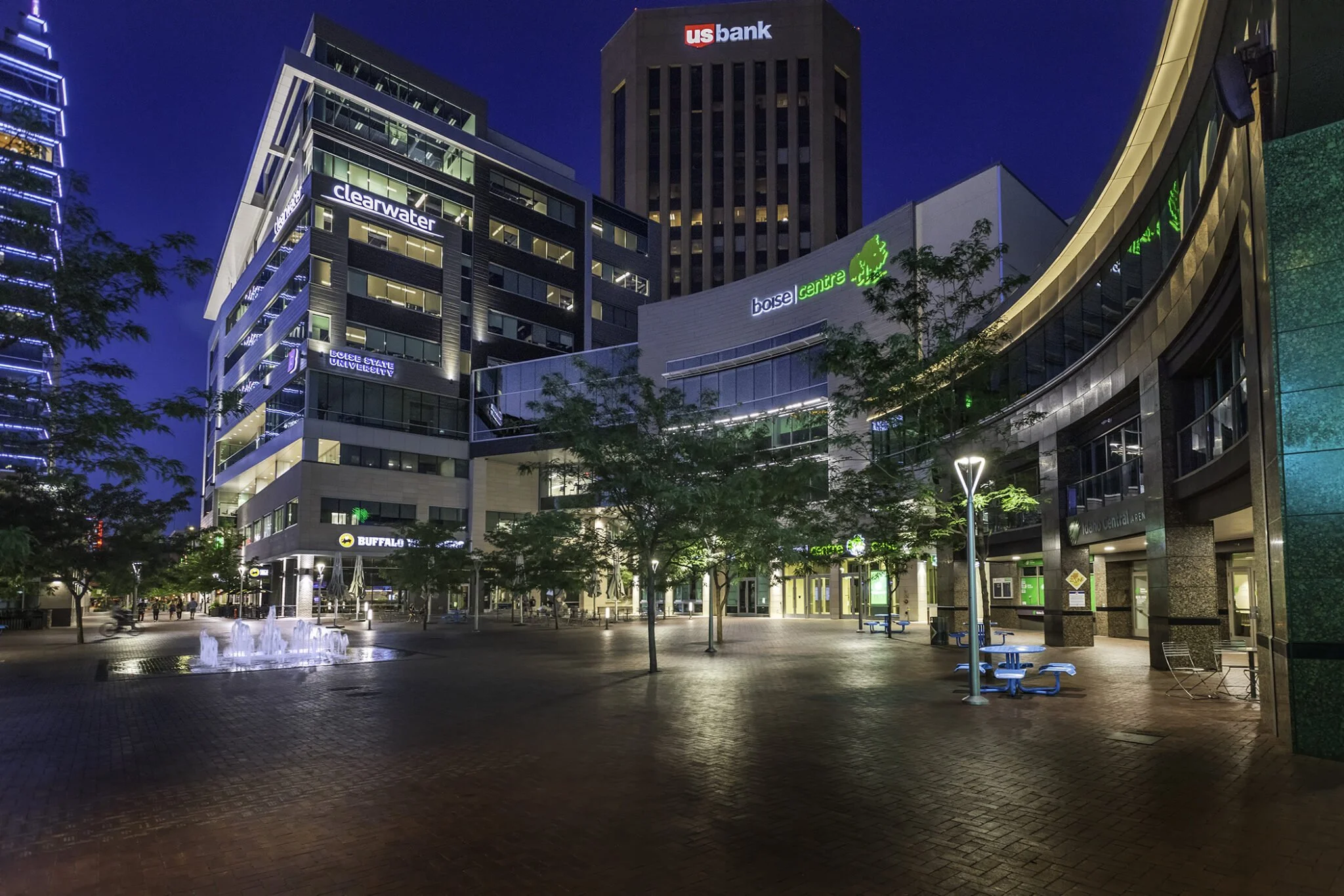
Boise’s best conference + Boise’s largest venue. Credit Visit Boise.
There's also the Geo Week partnership, which represents RCN taking its show beyond Boise for the second consecutive year. Byrd and Ellering share what that collaboration looks like, why it makes strategic sense, and what attendees can expect from RCN's presence in Denver.
