
The Re/Cap Podcast: Jason Jamerson on LSU’s XR Studio, NASA Digital Twins, Gaming, Film & Entertainment, Agriculture
FULL EPISODE
What do NASA, a Heisman Trophy-winning quarterback, Broadway productions, cutting-edge agriculture companies, and the largest National Science Foundation grant ever awarded have in common?
They've all been showcased by Jason Jamerson and LSU's XR Studio.
If that sentence doesn't immediately grab you, consider this; a 20-year veteran of New York's entertainment industry is now using consumer-grade drones and game engines to create millimeter-accurate digital twins of rocket assembly facilities, optimize chemical processing plants, and predict hurricane damage 100,000 times faster than previous methods.
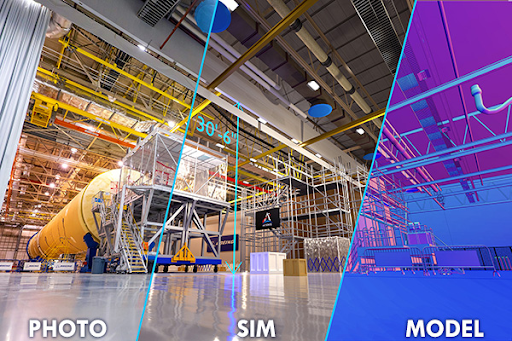
The Jamerson-helmed project modeling NASA’S Michoud rocket facility. Credit Jason Jamerson
This episode sees Jamerson, director of LSU's XR Studio and Director of Virtual Production, join me to unpack how entertainment technology became the secret weapon for industrial innovation, scientific discovery, and education that actually prepares students for careers that don't yet exist.
Digital Twins: From NASA's Rocket Factory to Open-Source Platforms
The origin story traces back to 2021, when NASA came to LSU looking for a digital twin of the Michoud Assembly Facility in New Orleans. This is colloquially known as America’s rocket factory, where the SLS rocket is assembled in nearly 2 million square feet of space under one roof. “Totally insane,” to use Jason’s words.
They built it anyway, scanning down to 2-millimeter accuracy, creating data catalogs of every piece of equipment, adding ontological relationship maps, and eventually integrating an AI chatbot that could query disparate data points in natural language.
The result? NASA saved an estimated $10mil on the first use by checking if equipment would fit through a garage door. Simple problems, sophisticated solutions eh?
Now, Jamerson's team is working with agriculture giant Syngenta on the FUEL initiative (Future Use of Energy in Louisiana)—the largest NSF grant ever(!) at $160 million—to build an open-source, low-cost digital twin platform for chemical processing facilities. Consumer-grade hardware. Free software. No proprietary lock-in.
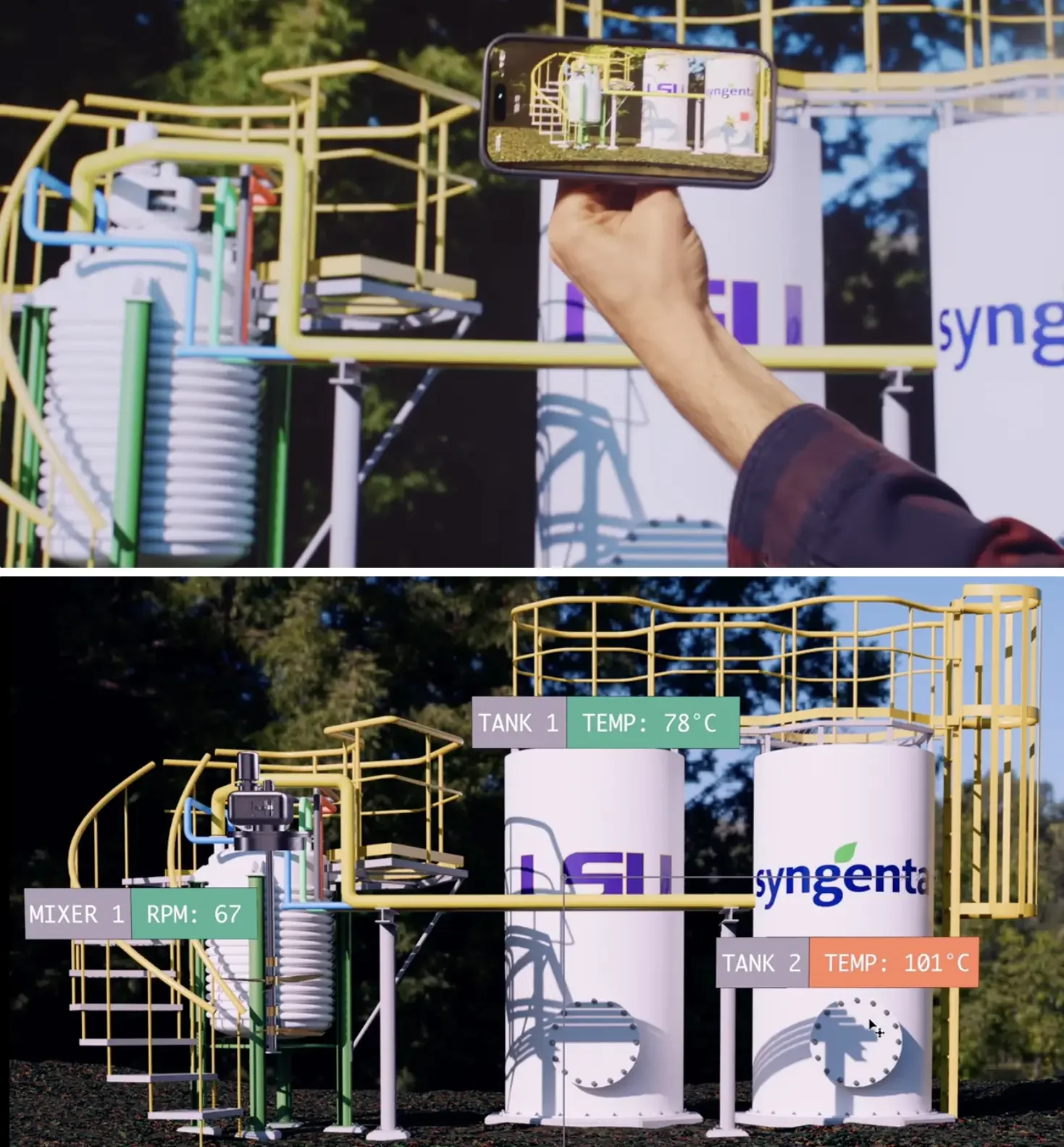
More broadly, the episode digs into the technical stack (GDOT game engine, Blender workflows, multiplayer capabilities), the security challenges (CUI-controlled facilities), and that crucial moment when they realized digital twins aren't one-size-fits-all; every single one is bespoke based on use case.
Game Engines, Entertainment Tech, and Industrial Breakthroughs
Here's the insight that separates Jamerson's approach: entertainment industry tools are built for speed, interoperability, and real-time rendering. Engineering CAD software prioritizes high accuracy and solid-based modeling. Different use cases, different strengths.
Jamerson's team brings game engines, Blender, photogrammetry, and virtual production techniques to industrial problems…and discovers that sometimes consumer tech reveals what traditional methods miss entirely.
The episode explores when that lightbulb went off, how motion capture for video games translates to analyzing athlete injuries, why the Microsoft HoloLens failed despite early promise, and how Meta Quest 3 now runs entire digital twins that previously required server-side rendering.
There's also the delightful detail about creating a non-CUI version of Michoud entirely from public Google Images, architectural PDFs, and manufacturer websites…only to have NASA ask them to take it down because it was too accurate.
XR Studio: Where Cutting-Edge Becomes Curriculum
LSU's XR Studio hosts students from art, computer science, and engineering collaborating on real-world projects funded by grants that pay their assistantships. And they're having a ball, solving gritty problems for NASA, the Army Corps of Engineers, Fortune 500 companies, and beyond.
Jamerson details how they've shot commercials, created Heisman campaign media shown worldwide, produced a children's show called Keepsake, and so much more. It’s what’s galvanized two major 2026 initiatives:
Coastal Resilience: Working with researchers who've increased hurricane damage prediction speed by 100,000x using AI. The goal? Accurately predict storm surge and flooding to make life-or-death decisions about what gets flooded during major hurricanes.
Digital Humans Lab: Tracking 600+ LSU athletes with multiple data types (MRI, flexibility metrics, blood pressure, proprietary scan data) and overlaying it on Unreal Engine Metahumans. Peel back the skin to see ligaments. Open the head to view MRI point clouds. Train AI on correlations humans can't spot to predict injury recovery and prevent future damage.
The AI Conversation, Live Theater, and Projecting
Jamerson doesn't shy from controversy. The episode tackles AI head-on—students angry about job displacement, designers furious about AI scenic design, the reality that Hollywood's production volume isn't coming back, and why empowering individual creators matters more than preserving menial jobs in crushingly large industries.
There's also the philosophical: live theater's been "dying for 10,000 years" but persists because of visceral intimacy that film and games can't replicate. Immersive theater (Punchdrunk, Meow Wolf) succeeds by focusing on experiential authenticity. And yes, Casablanca is overrated (his words, not ours).
The conversation ends with AGI, simulation theory, the balance between structure and chaos, and why flexibility, curiosity, and comprehension matter more than any specific skill set.
